
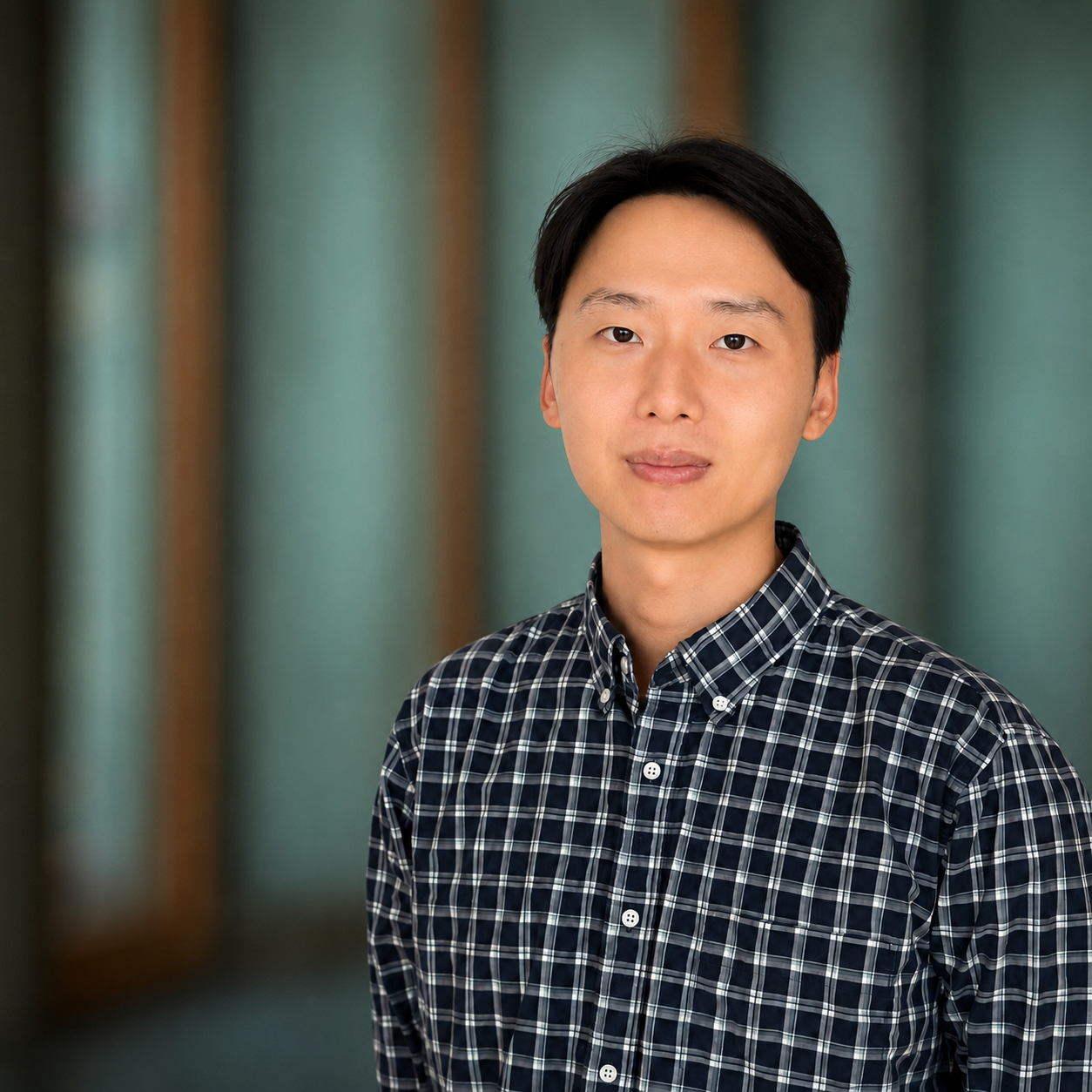
Dr. Heejung Kong
“The central question driving my research is how renewable energy, particularly solar energy, can be coupled with electrochemical technologies to meaningfully mitigate climate change. I believe that neither fundamental understanding alone nor a sole focus on industrial deployment is sufficient. My aim is therefore to connect mechanistic research with scale-up, device engineering, and techno-economic evaluation, allowing insights from each level to inform the others. Through this continuous feedback between fundamentals, implementation, and economic viability, I seek practical pathways toward climate-relevant impact.”
“The central question driving my research is how renewable energy, particularly solar energy, can be coupled with electrochemical technologies to meaningfully mitigate climate change. I believe that neither fundamental understanding alone nor a sole focus on industrial deployment is sufficient. My aim is therefore to connect mechanistic research with scale-up, device engineering, and techno-economic evaluation, allowing insights from each level to inform the others. Through this continuous feedback between fundamentals, implementation, and economic viability, I seek practical pathways toward climate-relevant impact.”
PostDoc
Technical University of Munich

Scientific career and research areas
Dr. Heejung Kong received his Dr. rer. nat. degree from Technische Universität Berlin. He gained research experience at Helmholtz-Zentrum Berlin für Materialien und Energie and Kyungpook National University, working in the fields of photoelectrochemistry, nanomaterials, and laser processing. His expertise encompasses nanomaterial synthesis and characterization, biomass conversion and product analysis, multiphysics simulation, and device modelling. In March 2026, he joined Dr. Verena Streibel’s research group at the Walter Schottky Institute, Technical University of Munich, as a postdoctoral researcher.
In CO2UPLED he focus on the design, simulation, fabrication, and testing of demonstrator devices, as well as the life-cycle assessment and techno-economic assessment of photoelectrochemical CO2 conversion systems. Hiswork also includes the fabrication and characterization of photoelectrodes and catalysts. By combining device-level multiphysics modelling with operando spectroscopy and photoelectrochemical measurements, he aims to identify the key material, interfacial, and transport processes that determine device performance and to translate these insights into scalable system designs.
A complete list of Heejung Kong’s publications can be found on ORCID and Google Scholar:


Major awards, achievements and scholarships
The working group headed by Verena Streibel


